Back to the type library 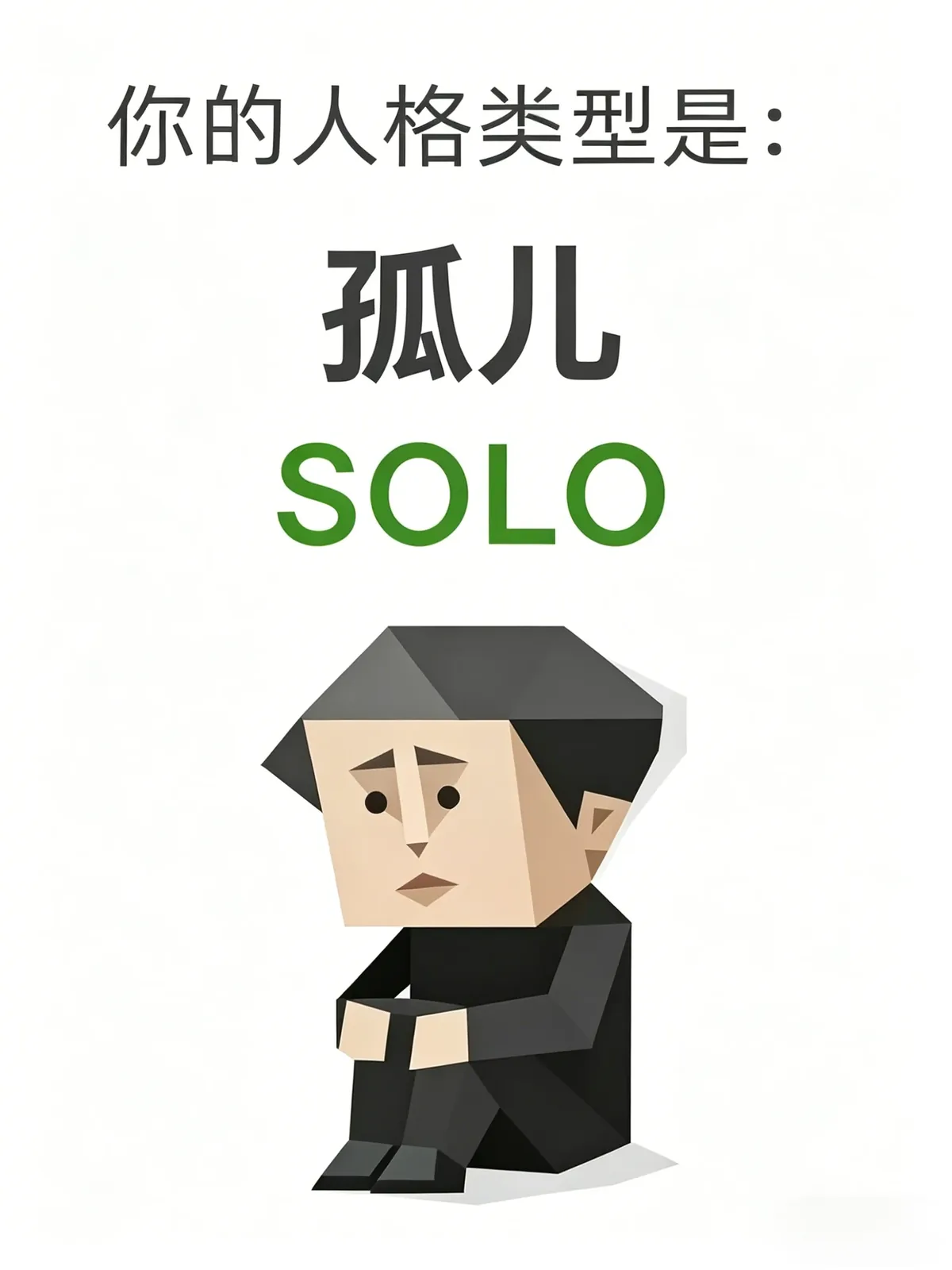
Loner
I cried. How did I become the orphan type?
Congratulations. You drew the ultra-rare SOLO type. Do not cry too soon. A king's coronation is often a solitary ceremony. Loner types tend to carry low self-worth, so they sometimes distance themselves from others before others can get too close. Around the outside of their soul they build a Great Wall named Do Not Touch Me. Every brick is an old wound. The loner resembles a hedgehog that hides every soft spot and faces the world with its hardest spines. Those spikes are not aggression. They are sentences that never made it out of the mouth: please stay back, I am afraid you will get hurt too, and please do not leave me.
Profile structure
How to read this profile
This page shows the stable shape of the profile across five models and 15 dimensions, so readers can understand its core temperament and behavioral emphasis.
Result logic
Standard profiles come from the fixed profile library. The system turns the overall signal into a 15-dimension shape, then matches that structure against the library.
Five-model view
The profile is read through five structural layers: self, emotion, attitude, action drive, and social behavior.
15-dimension shape
Each dimension carries a distinct level profile, and together they form the overall personality contour.
Special-outcome priority
Special outcomes do not sit inside the standard library. They override or catch results through separate rules.
15 Core dimensions
The 15 dimensions below are grouped into five models to show the profile's more stable psychological structure and behavioral center of gravity.
Self model
3 Self model
S1 Self-esteem & confidence
You hit yourself harder than anyone else does. Even praise needs to pass an authenticity check first.
Self model
S2 Self-clarity
Most days you recognize yourself, though emotions occasionally hijack the account.
Self model
S3 Core values
Comfort and safety matter more to you. Life does not need to run in permanent sprint mode.
Emotion model
3 Emotion model
E1 Attachment security
Your relationship alarm system is hyper-sensitive. Even one unread message can trigger an imagined finale.
Emotion model
E2 Emotional investment
You invest in love cautiously. It is not that the door is closed, just that the security system is strict.
Emotion model
E3 Boundaries & dependence
Space matters. Even in love, you still need a piece of ground that belongs only to you.
Attitude model
3 Attitude model
A1 Worldview tilt
You view the world through a defensive filter: doubt first, approach later.
Attitude model
A2 Rules & flexibility
You have a stronger sense of order. If a process exists, you would rather use it than blow things up on impulse.
Attitude model
A3 Sense of meaning
Your sense of meaning runs low. Many things can feel like empty ceremony.
Action drive model
3 Action drive model
Ac1 Motivation
Your first instinct is to avoid disaster. Risk management wakes up before ambition does.
Action drive model
Ac2 Decision style
You think things through, but not to the point of system failure. It is a normal level of hesitation.
Action drive model
Ac3 Execution mode
Your execution has a deep emotional bond with deadlines. The later it gets, the more awake you become.
Social model
3 Social model
So1 Social initiative
Your social engine warms up slowly. Taking initiative usually requires a long charge-up.
Social model
So2 Interpersonal boundaries
Your boundary sense is stronger. When someone gets too close, your first instinct is to step back half a pace.
Social model
So3 Expression & authenticity
You read the room. Truth and social polish each get a share.